Buying a home in New York carries an extra layer of mathematics. In between transfer taxes, manor tax obligation thresholds, co-op peculiarities, and lender requirements, closing day can seem like an accounting examination. The numbers are foreseeable once you understand where they originate from, however most customers don't obtain a clear photo up until late in the process. That is preventable. With a little planning and the appropriate team, you can stroll into the closing with confidence as opposed to surprises.
I invest much of my time describing the "why" behind each fee. Purchasers do better when they know which costs are flexible, which are set by statute, and which rely on the residential property type. While this guide is geared to New York State, I'll call out distinctions you'll see in New York City and downstate regions, and I'll reference the way a realty attorney in Clifton Park or a property property attorney in Albany commonly approaches these concerns upstate. The concepts correspond whether you are buying a starter colonial in Clifton Park, a midtown Albany condo, or a mixed-use structure in Saratoga County.
What counts as a closing cost
Think of closing costs as 2 buckets. The first pail is transactional: legal work, title assessment, searches, study, and filing fees that transfer and safe ownership. The second pail is lender-related: fees to stem and finance your mortgage, plus escrow down payments for taxes and insurance. With each other they usually land in between 3 and 5 percent of the purchase rate for financed acquisitions upstate, and 2 to 4 percent if you are paying cash money. In New York City, purchaser total amounts can skew higher due to mansion tax, condo functioning capital payments, and extra title premiums on high-value properties.
A quick instance assists: on a $425,000 single-family home in Clifton Park with 20 percent down, a purchaser could see $12,000 to $18,000 in closing costs omitting prepaid items and escrows. On a $1.6 million apartment in Manhattan with financing, it prevails for buyers to see $60,000 or even more, mostly due to estate tax obligation and higher title premiums.
Your legal group and why it matters
In New York, attorneys handle domestic closings greater than representatives or escrow firms. Your lawyer prepares or reviews the contract, orders and examines title, deals with defects, coordinates with the lending institution, and manages closing-day dispensations. The option of counsel is a line thing, yet it likewise influences nearly every various other cost.
A realty attorney in Clifton Park NY that routinely encloses Saratoga, Albany, and Schenectady areas will certainly have a feeling for regional customizeds, metropolitan search preparation, and survey requirements. That knowledge can conserve you rush costs and stop final adjournments. If you are buying industrial property, an industrial real estate lawyer in Saratoga County will certainly expect environmental due persistance, UCC filings, and tenant estoppels that do not develop in a typical single-family purchase. For a co-op or condo in Albany, a household property attorney in Albany recognizes the building-level documents that trigger extra questions or fees.
Some customers search "home closing lawyer near me," then choose the very first outcome. Do better. Ask how many bargains they close monthly, their experience with your residential property kind, and whether they will personally participate in the closing. An excellent property purchase legal representative pays for themselves by capturing costly contract pitfalls and by working out away junk fees.
The contract establishes the tone
Costs begin to solidify as soon as the contract is signed. In New York, the seller's attorney typically prepares the initial contract and the buyer's attorney does a property contract review, after that bargains motorcyclists that allocate duties. That is where you secure which event spends for what. A tidy biker can conserve weeks later.
Consider the complying with contract choices and just how they affect your wallet:
- Mortgage backup: If you require financing, a solid contingency safeguards your deposit and gives time to secure underwriting without rush charges. Cutting the period as well brief invites expansion charges. Survey obligation: In numerous upstate deals, the purchaser orders and pays for a new instrument study if the existing one is dated or missing. Clarifying who pays avoids unpleasant arguments after title elevates an exception. Municipal search extent: Some communities need extra look for open licenses or unpaid energy costs. Ensure the contract makes the seller responsible for treating violations and shutting open permits, not simply divulging them. Personal building and credit scores: Devices, gas oil changes, and repair service credit scores need to be composed clearly. Obscurity typically implies final back-and-forth that delays closing and can activate additional legal time.
The few hundred bucks you spend for a careful testimonial can stop multi-thousand-dollar errors. I have actually seen buyers inherit an open certificate of occupancy concern that cost them months and a number of thousand dollars due to the fact that the contract only called for a "valuable title" without spelling out municipal cure obligations. A specific rider would have pressed that cost to the seller.
Title insurance, searches, and the survey
Title job is the https://ialawny.com/estate-planning/ backbone of New York closings. Your lender calls for a lending institution's policy, and you need to insist on an owner's policy. One premium, set by state-regulated prices, typically covers both, with the loan provider's policy included at a minimized rate. For a $425,000 purchase price with a $340,000 finance, anticipate a combined title premium in the community of $2,000 to $2,800 upstate, plus search and recording add-ons. The rate actions up with price.
What you are paying for:
- Abstract and searches: Area staff and court searches check for judgments, personal bankruptcies, liens, and tax delinquencies. In Albany Region, a common search package typically returns within a week or two, though holidays can extend that. Title examination: A title search lawyer in Clifton Park or an inspector involved by your title company examines the chain of title for problems such as missing out on discharges, boundary infringements, or improper recommendations. Clearing up those issues early avoids adjournment fees. Endorsements: Typical endorsements in New York include zoning, tax parcel, and ecological lien recommendations. Lenders may additionally request a place recommendation tied to a study or study affidavit. Survey: Lots of lending institutions accept a study affidavit if the existing study is recent and validated, but more often you will need a brand-new instrument survey, specifically if the whole lot has been modified, fencings moved, or renovations added. A normal single-lot study in Saratoga County runs $700 to $1,200, more for acreage or complex boundaries.
One persisting edge situation: shared driveways and personal roadways. If there is no taped upkeep contract, your title firm may call for one to issue insurance coverage. Getting next-door neighbors to sign can require time. Strategy early, or you could encounter a closing delay and added lawful hours.
Government fees and taxes
New York gathers its due at the closing table, but that pays which tax varies.
- Transfer tax obligation: State transfer tax obligation is customarily paid by the vendor at $2 for each $500 of consideration (0.4 percent). In New York City there is also a city transfer tax obligation, once more often the seller's duty. Buyers just feel this indirectly unless they are acquiring new construction where some sponsors try to shift tax responsibilities in the offering plan. Mansion tax obligation: This is on customers. New York State imposes a one percent manor tax obligation on homes at $1,000,000 and above, with a finished price up to 3.9 percent for prices at $25 million and higher. Outside NYC, most purchasers see only the 1 percent rate. In the $1.2 million range, that is a $12,000 line thing you have to bring to the table. Some agreements permit a credit scores from the vendor to help offset, however the responsibility stays yours. Mortgage recording tax obligation: Customers pay this on most home loans safeguarded by real estate. Rates differ by county and by funding size. Upstate, you will normally see 1.25 percent or 1.0 percent depending on the region, with a small portion praiseworthy to the lending institution if they appoint a CEMA. Co-ops are the exception since there is no deeded real estate; instead you authorize a protection contract, and no mortgage tape-recording tax uses. That is one factor funding a co-op can be less expensive to close than a condo. Recording costs: Areas bill per-page costs to videotape the deed and mortgage, plus a real property transfer record. Budget a few hundred dollars. Albany and Saratoga clerks have simple charge timetables that your lawyer will certainly approximate when record page matters are known.
If a vendor wants to close a space in their web proceeds, they may ask to change a portion of costs to you through the contract. Your attorney ought to press back on anything that deviates from neighborhood customized unless you get an offsetting cost reduction.
Lender charges and points
Lenders' disclosures look intimidating, but the charges fall into predictable groups. You will see a source cost, underwriting and handling fees, credit scores report, appraisal, flooding accreditation, and often an application fee. Integrated, these commonly land in between $1,200 and $2,500 for a traditional lending upstate. Discount factors, if you select to get down the price, are additional and totally optional.
Appraisals run $500 to $900 depending on property kind and location. Rural homes or huge acreage can set you back more. If the evaluation can be found in reduced, you may renegotiate or bring even more money. Beware about ordering rush evaluations. I have seen buyers pay an extra $200 to cut two days off the timeline, just to wait a week for underwriting anyway.
Lock expansions are another preventable cost. If your rate lock runs out since title clearance slid or the apartment set of questions took longer than anticipated, the loan provider may charge to prolong. Build timeline slack right into your contract dates, especially around holidays when community offices close.
Escrows and prepaids
Escrows are not fees. They are your money set aside by the loan provider to pay tax obligations and insurance coverage when due. Expect to money a couple of months of real estate tax and house owners insurance at closing. If you close shortly prior to a tax due day, you will certainly transfer more. This is why estimates vary so widely from very early pre-approvals.
You will certainly likewise pre-pay passion from the day you close through month-end. Close on the 3rd, and you will pre-pay almost a complete month of rate of interest. Close on the 28th, and it is a couple of days. This is not a factor to play poultry with the schedule, but it serves when deciding whether to push a closing by a week.
For apartments and co-ops, expect structure fees at closing: usual charge modifications, functioning capital contributions of one to three months, and move-in costs. In Albany and Saratoga County suv condominiums, a two-month capital contribution prevails and is not refundable. Aspect that right into your cash money to close.
Attorney charges, that bills what, and how to examine invoices
Attorney costs for a simple upstate domestic purchase commonly vary from $1,200 to $2,200, more in New York City and more for complicated bargains. Apartment fees usually cover contract arrangement, title evaluation, and the closing itself. Anticipate add-ons for study coordination, power of attorney job, or curing challenging title flaws that involve extended interaction with third parties. Great invoices are made a list of. If an expense is a solitary line with a multitude and no description, request for detail.
If a property disagreement emerges mid-deal, say a boundary disagreement or an encroachment that requires an easement, a residential or commercial property disagreement attorney in Albany may action in parallel with the closing group to bargain a resolution. This is not routine, however it happens frequently enough that you need to not be stunned if your lawyer flags a prospective surcharge to handle it. The secret is early detection, commonly with study review and title exceptions.
Co-ops, condominiums, and single-family homes do not close the same way
Property type forms costs.
Single-family homes and townhouses: You will certainly pay deed recording, mortgage tape-recording tax if funded, typical title premiums, and likely a study. Metropolitan searches matter because lots of communities require COs for additions and decks, and open permits can hinder a closing. Upstate, this is one of the most typical scenario.
Condos: You still record a deed and mortgage and pay mortgage tape-recording tax obligation. There is no requirement for a standard instrument study, yet you will pay building-level costs such as a move-in fee, handling representative handling fee, and a working capital contribution. Title insurance still uses, though the assessment focuses on the condominium declaration and common charges.
Co-ops: No deed, no mortgage tape-recording tax obligation, no title insurance. Instead, you acquire shares and receive an exclusive lease. You will certainly pay a recognition contract charge, board application fees, and the co-op's lawful charge, along with a lien search or co-op search instead of full title. Attorney time tends to be heavier on file testimonial and board package preparation, lighter on taping logistics. Closing costs as a percentage of rate can be lower than condominiums for funded buyers, primarily because of the lack of mortgage recording tax.
Negotiating what you can
Not every line item is flexible, however there is space to improve your base line.
- Shop lenders on the same day and request for a cost worksheet, not simply price. A quarter point better on rate is useful, however shaving $1,000 off lending institution costs matters too. Ask your lawyer to get contending title quotes where possible. Title premiums are promulgated in New York, but search and service charge vary. Push back on duplicate or vague fees. "Loan provider doc prep" and "handling" may be reputable, however there ought to not be two in a different way named costs for the exact same task. If new building, read the offering plan carefully. Enrollers typically move transfer taxes and lawful fees to customers. Negotiate credit histories where market conditions allow. If you are near the mansion tax obligation limit, think about whether vendor giving ins structured as cost reductions can assist, but do not play games that endanger evaluation integrity.
I when dealt with a customer in Clifton Park who was estimated almost $900 in lending institution "management fees" on top of underwriting and processing. We asked simple inquiries concerning what, exactly, each charge covered. The lender cut $500 within an hour. Absolutely nothing adversarial, simply clarity.
Timeline, bottlenecks, and the hidden expense of delays
Closing prices do not reside in a vacuum. A delayed closing can hemorrhage money. Rate lock expansions, additional evaluation updates for aged documents, and thrill messenger fees load up.
Typical cadence upstate looks like this: contract within a week of deal, mortgage application instantly, appraisal within 2 weeks, title got as soon as you have a contract, title in a week or 2, commitment around three to four weeks, clear to close soon after, after that timetable. The slow-moving factors are usually community searches and curing title defects. If you are purchasing near completion of the year, add time for clerk backlogs and vacation closures.
Your lawyer's practices issue right here. A responsive real estate lawyer in Clifton Park will certainly purchase title early, evaluate it within a day or 2 of receipt, and send out a precise title objection letter to the vendor. When counsel waits a week to review the binder, you lose choices. If you require speed, state so at interaction and ask what can be progressed prior to the appraisal lands.
Cash acquisitions are simpler, not cost-free
Cash purchasers skip mortgage-related costs, however still pay legal fees, title costs, searches, survey if needed, and recording charges for the deed. A $350,000 cash purchase in Albany County may see $4,500 to $7,500 in closing costs depending upon survey and recommendations. Do not skip the owner's title plan to save a few thousand. I have actually seen wild matters surface years later on, including a prior unrecorded deed that intimidated marketable title. The insurance coverage is an one-time premium that lasts as lengthy as you have the property.
When the unforeseen appears
Even clean-looking deals create quirks.
- Oil storage tanks: Hidden storage tanks are not prohibited, yet lending institutions and insurance providers have viewpoints. If your examiner discovers proof of a prior container, you might pay for a soil examination or urge the vendor get rid of the storage tank and offer a no-further-action letter. The cost can be a few hundred for testing or numerous thousand for removal and remediation. Septic and well: Rural properties present water potability and septic examination issues. A fell short percolation examination or a system that needs substitute can upend budget plans. Put clear screening provisions and responsibility allocations in the contract. Boundary advancements: Fences, sheds, and also driveways end up across lines more often than people assume. A border line arrangement or easement can repair it, yet it takes some time and extra legal work.
This is where the value of a knowledgeable building closing lawyer near me materializes. Speed, judgment, and partnerships smooth these bumps.
Estimating your money to close
To obtain a sensible number early, you need property-specific info and a couple of presumptions. I inform purchasers to develop a basic worksheet:
Purchase cost. Less deposit currently paid. Plus closing costs in 2 parts: transactional (title, legal, searches, recording, survey) and lender/escrows (origination, assessment, tax obligation and insurance escrows, per diem passion). Add estate tax if suitable and any type of organization working capital. Deduct negotiated vendor credits. The worksheet needs to generate both an average and a traditional number.
For a $425,000 purchase in Clifton Park with 20 percent down, a conventional finance, and normal costs, a traditional cash-to-close estimate could look like this in rounded numbers: $85,000 deposit, $2,300 title premium and searches, $1,800 lawyer, $900 appraisal and credit rating records, $700 study testimony or $1,000 brand-new survey, $1,600 loan provider fees, $200 recording, $2,400 escrows and daily rate of interest, for a complete near $95,000 to $96,000, much less your $10,000 contract deposit. Readjust as your loan provider's Funding Price quote and your lawyer's title quote company up.
Working with specialists who recognize the terrain
Closing in New York is group sport. Your agent negotiates rate and terms, yet your legal representative shields you in the documents and on title, and your lending institution manages the funds. Communication in between them saves money.
If you are interviewing counsel, whether a realty attorney Clifton Park NY or a domestic realty attorney in Albany, ask about their technique to title objections, timelines for review, and how they approximate closing costs initially. For industrial procurements, a commercial property lawyer in Saratoga County that takes care of leases, 1031 exchanges, and ecological diligence brings a different toolkit and cost framework. Make sure you straighten experience with property type.
For particularly thorny backgrounds, such as inherited residential properties, divorces, or homes with partial launches missing from old refinances, a title search attorney in Clifton Park can work alongside your primary advice to surgically clear chains of title. And when deals surface simmering disagreements, a building disagreement attorney in Albany can solve encroachments or easements that may or else sink the transaction.
Two brief checklists that help purchasers stay in control
- Ask your lending institution for a composed cost failure the very same day you rate-shop, after that compare apples to apples, consisting of points, lending institution credit reports, and third-party fees. Have your lawyer order title instantly after contract, examine the binder within two days of receipt, and send a limited argument letter with a cure deadline. Confirm whether you need a new survey early, specifically if fencings, sheds, or enhancements are present. For condominiums and co-ops, request the structure's closing cost timetable and policies on move-in fees and functioning resources prior to you forgo contingencies. Revisit your cash-to-close worksheet after the evaluation and after the title report, not simply on the eve of closing.
Red flags and when to touch the brakes
Certain patterns signal problem. Repeated "to be given at closing" solutions from the vendor's side about open authorizations or missing out on certificates need to trigger firmer contract language or an escrow holdback. If your lender's disclosures maintain adding brand-new charges, pause and reprice with one more loan provider prior to you are unfathomable. When a title record provides multiple old home mortgages marked "no discharge discovered," anticipate a longer treatment duration and ask your lawyer just how they prepare to locate fulfillments or whether a title firm will certainly accept a testimony and indemnity.
Do not be afraid to change your closing day to stay clear of a waterfall of little charge costs. Staying on a rate lock that ends two days before the community can release a final certificate is false economy.
Final ideas customers tell me they desire they recognized sooner
Most closing costs are predictable, but just if you surface them very early and appoint responsibility in the contract. Lender fees look comparable on paper but vary in the information. Title insurance is not the location to skimp. Surveys resolve even more conflicts than they produce. Estate tax obligation tiers are unforgiving, so prepare for them if you are anywhere near the limit. And probably crucial, a skilled real estate transaction attorney doesn't simply appear at the end. They set the table at the beginning so your closing day seems like a rule instead of a firefight.
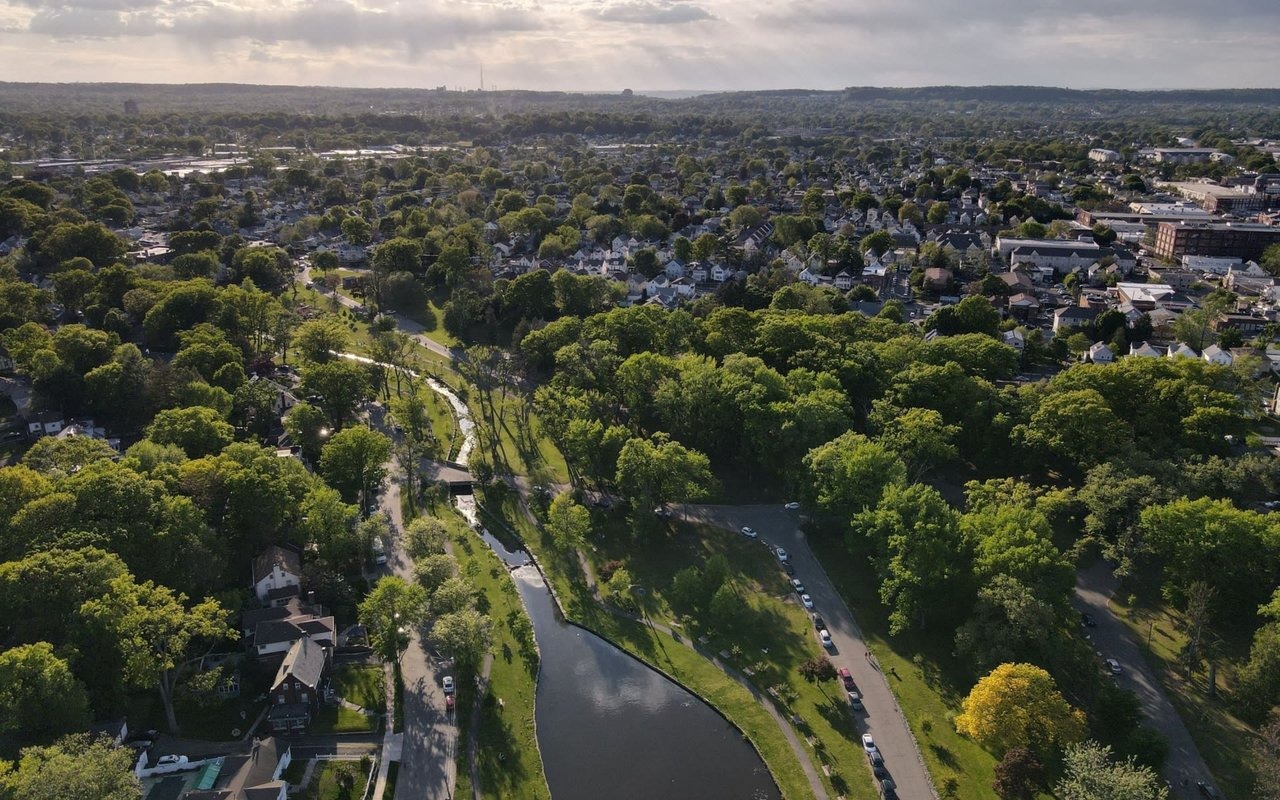
If you maintain these concepts in sight, New York's closing landscape ends up being accessible. Build the ideal team, start the title and survey process early, read your disclosures, and review your cash-to-close estimate at all-natural checkpoints. You will sign the last page that day with a clear head, a clear title, and no enigma fees prowling in the envelope classified "purchaser's funds."
Near Our Clifton Park Office:
Clifton Park-Halfmoon Public Library Maple Road Park Saratoga County Government Center